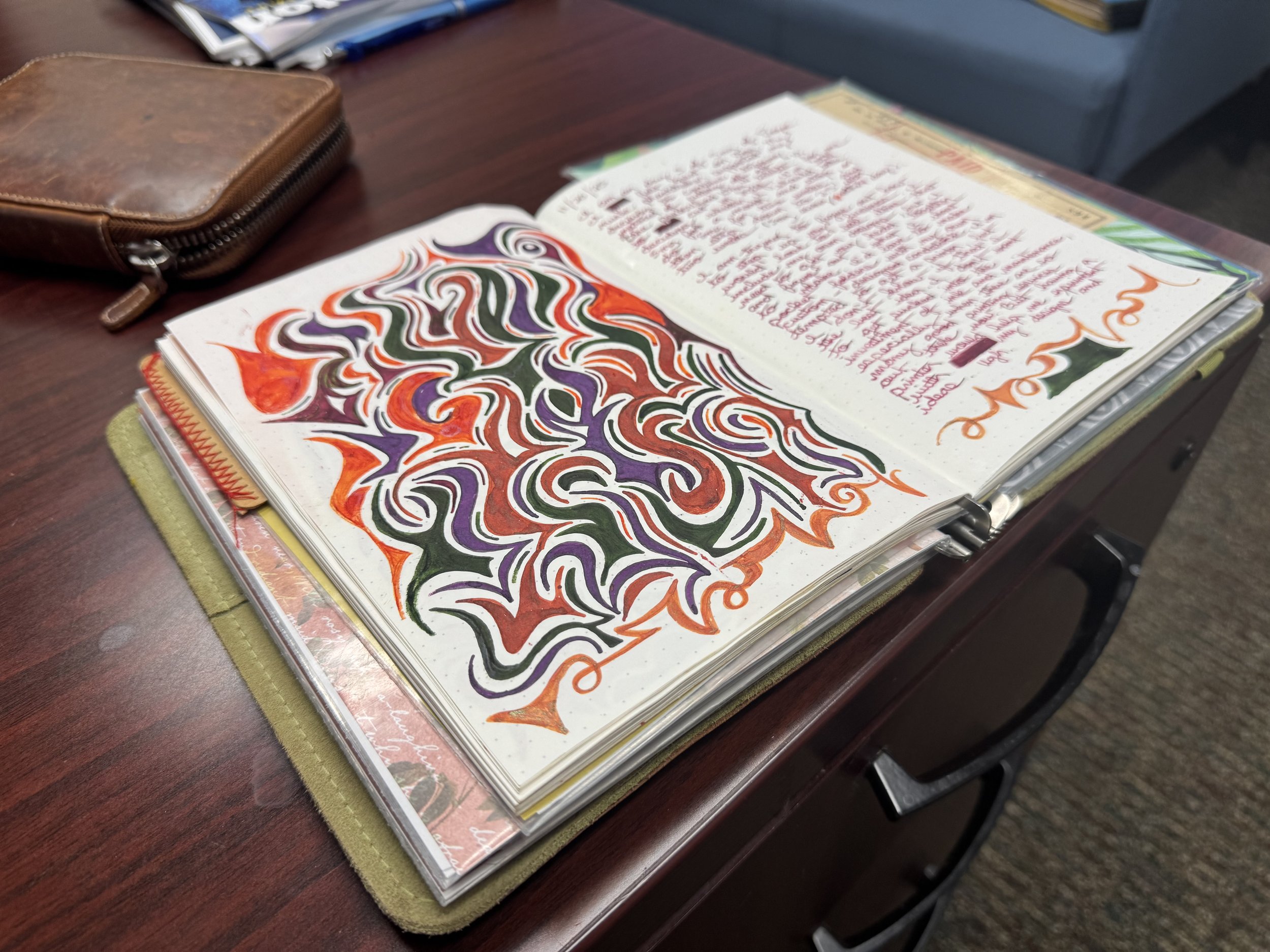
Stationery and notebook people like myself are fiercely in love with their tools. And for good reason. Stationery, notebooks, and art supplies are avenues to express thoughts, experiences, and reflections. People who don’t understand call it useless materialism, and while enthusiasts are susceptible to it just as any other hobbyist in other realms, it’s not correct to dismiss these tools and people’s love of them.
Brief History with Notebooks and Sketchbooks
I’ve loved notebooks for as long as I can remember. My earliest memory was when my mother bought me a small hardcover journal with a picture of a white teddy bear on the cover from a local bookstore. She told me it was for writing my thoughts. I don’t remember doing much with it, other than a few scribbles with my pencil, but I was enamored by the concept.
In junior high and high school, I focused much of my attention on sketchbooks, trying to experiment with my artistic style that I was always too afraid to fully immerse myself in due to perfectionism. Instead of being free to experiment, I was too afraid to draw something I deemed as ugly. But I still enjoyed the act of drawing in a notebook. Back then, journal and sketchbook spreads were displayed on Live Journal, a platform not as toxic as modern social media as we know today, but still an avenue for comparison fatigue as you clicked through different sites and saw beautiful, hand-drawn spreads. But it was also useful because it opened me up to different ideas that I could use for my own sketchbook. This was before Ryder Carroll created the bullet journal system, which exploded in popularity on social media.
I let my perfectionism feed my inferiority complex instead of experimenting and practicing. It wasn’t until I was in a drawing class in undergrad where I slowly gained confidence in my own artistic style. I wasn’t the best, but I had a style, and moved forward.
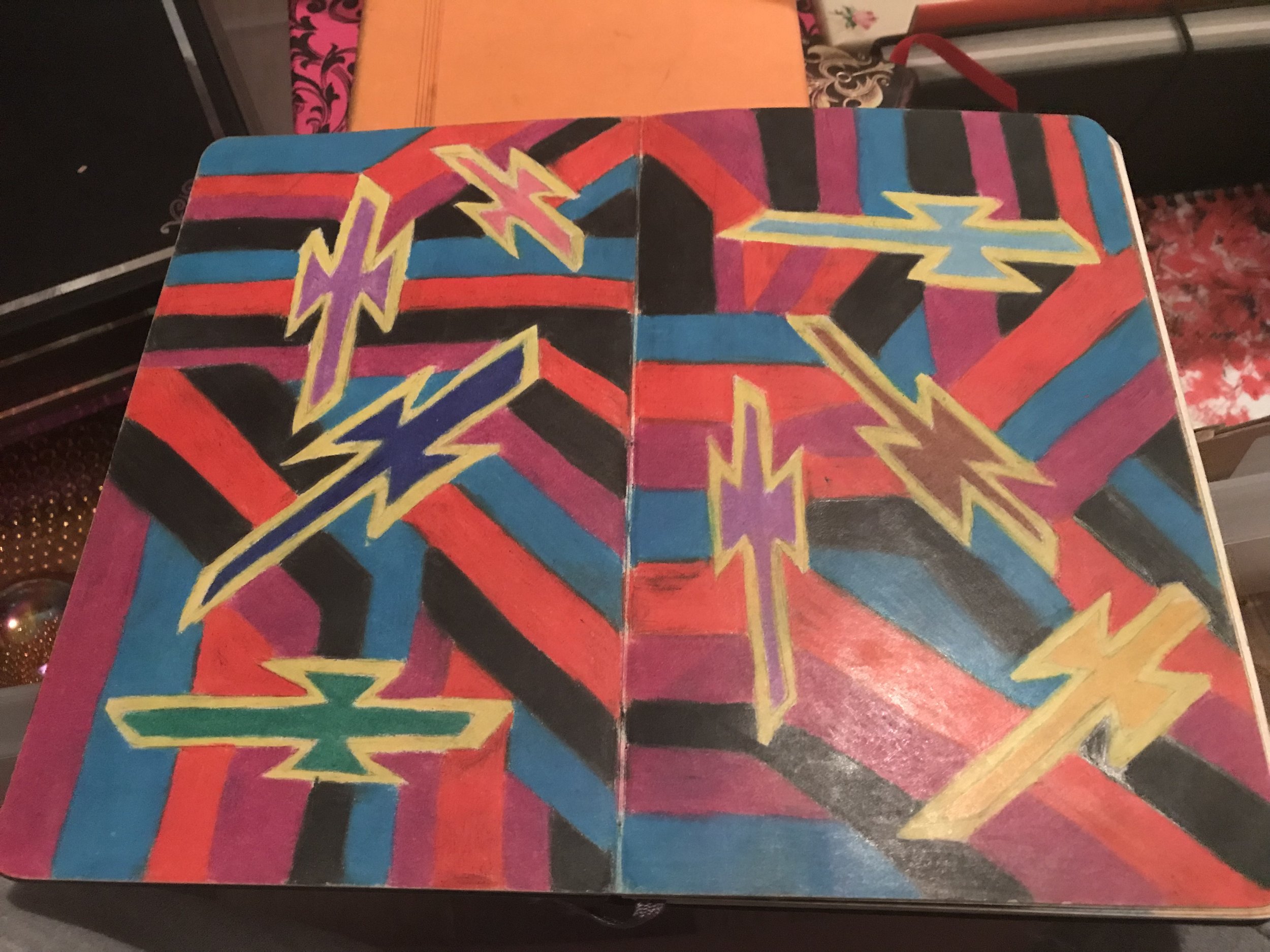
I was way too harsh with colored pencils back then
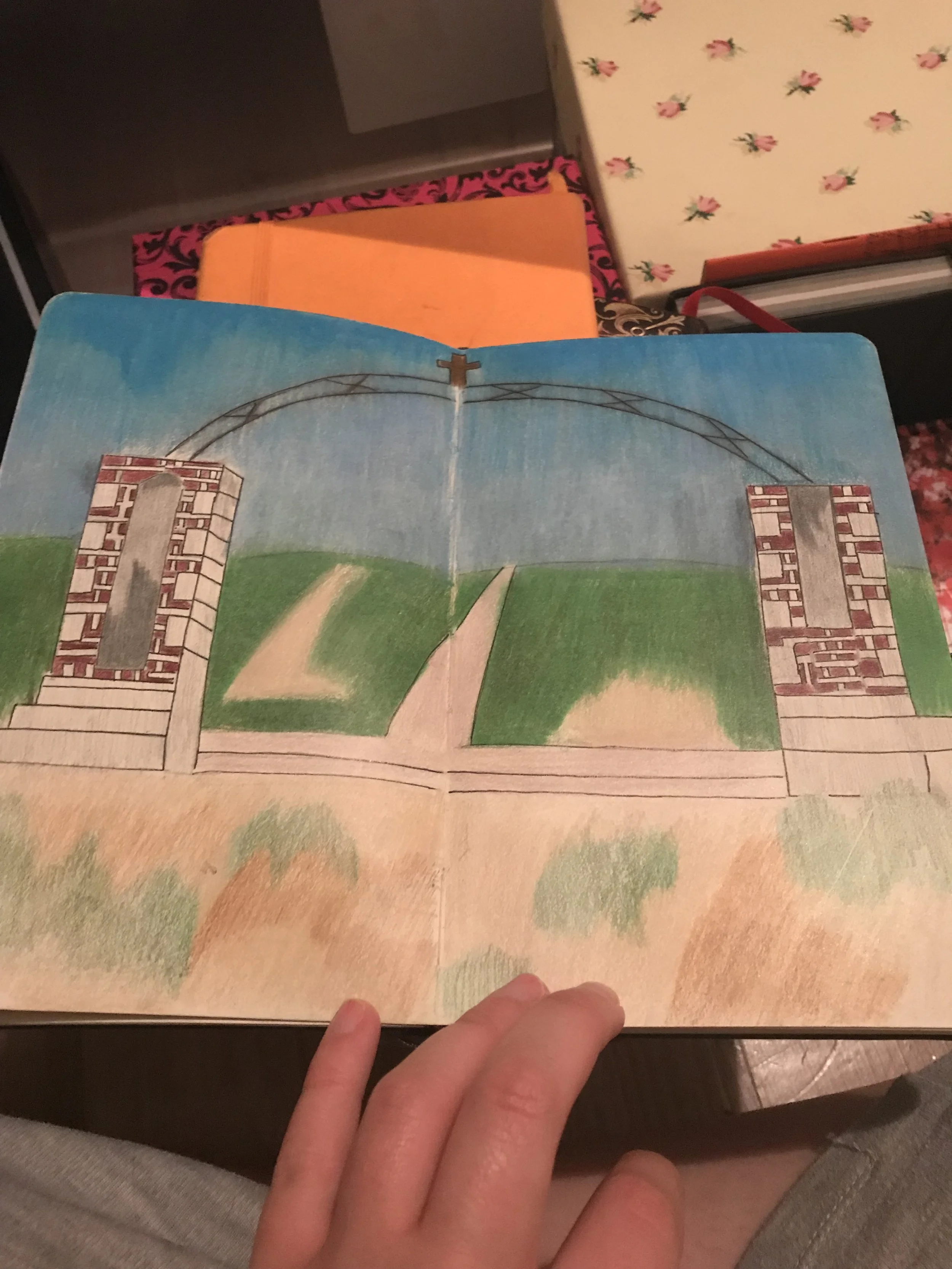
I journaled off and on throughout my youth, but it wasn’t until college where I developed a regular journaling habit, partly influenced by all of the writing courses I took that required journal entries that reflected on reading assignments (looking back, requiring handwritten journal entries was much more useful than Blackboard message boards, but that’s a whole other topic). I began journaling extensively around 2010 in undergrad as I was starting to discover who I was and what meant the most to me. I have ebbed and flowed throughout the years, but have for the most part kept up with a consistent journaling practiced that has helped me ground myself.
Stopping the Overwhelm
But journaling takes many forms. It can be in the form of simple lists, daily logs, memory keeping, stream-of-consciousness, an hour-by-hour synopsis (interstitial journaling), etc. It can easily lead to overwhelm to find the right system. Another common snag is the fear of “profaning the pretty notebook”, where the writer feels that their thoughts are too embarrassing or not smart enough to justify the use of the notebook. I have experienced both of these snags in my journaling practice, but I eventually got over them as I continued to push through my writing. It’s still a temptation, but not as strong as before.
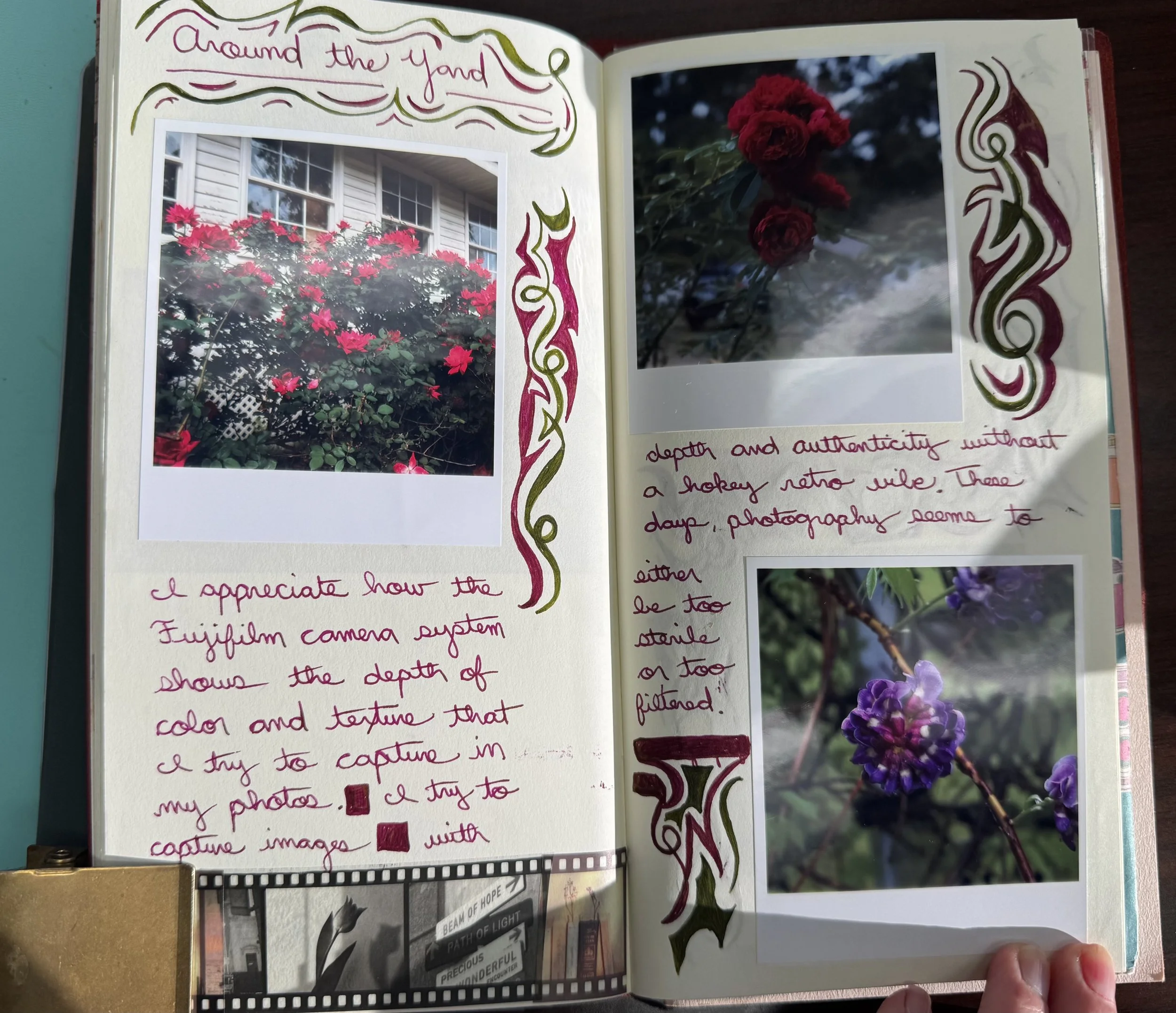
With that, I want to introduce a few points to help you push through if you’re struggling with your journaling:
A filled notebook will always be more interesting than an empty one. An empty notebook is useless and boring. Nothing is sadder than an empty, useless notebook.
What you say is more important than the notebook. Deep and intriguing thoughts written in a cheap notebook is better than aesthetically pleasing spreads in an expensive notebook without much depth. That doesn’t mean you should compare yourself to others or think that your thoughts are not worthy. The point is to be courageous enough to use your journal to reflect and think. None of us will sound like Aristotle, but we can at least better understand our voice.
Figure out what journaling style works best for you. You don’t have to do stream-of-consciousness, feelings-based journaling. You can simply log interesting bits about your day, brainstorm ideas, use a commonplace book for quotes and paraphrases, or plan for the future. Five-year diaries are great for simple day-to-day tracking of interesting tidbits over a five-year span.
If you want to journal about your feelings, make sure it doesn’t become a door to spiral into negative thinking. Feelings-based journaling should always be based in reality and provide space for moving forward in hope. Ground your feelings in reality, which is based on a mixture of experience and facts. While feelings are important, they should not be the only barometer to measure the state of a situation. While for some, externalizing feelings on paper finds relief, for others it can trigger negative feelings even more. If you’re susceptible to this, find other journaling methods, or maybe step back for a while.
If you’re interested in finding ways to journal in a way that examines your feelings while grounding you in reality and provides hope, check out the Ignatian Examen.
Do not view your notebook as a precious object. Who you are is more important than the object. The notebook is a reflection of your own unique story on earth. This is why I love notebooks, not because they are precious in and of themselves, but because they are the best avenue to reflect on my own unique story on earth. Notebooks and pens are only useful if they reflect your own unique life. We all have callings, and notebooks help us reflect this truth. Notebooks also are the best medium to show the messiness of our lives, whether through writing or drawing. They showcase our pain, interests, joy, loves, and passions in a way that other media can’t. We don’t have to live extraordinary lives to have good journal entires; we just have to get up and live life.
If a paper notebook is too restrictive, digital journaling tools such as Day One, Apple’s Journaling app, or a text editor would be great ways of quickly getting out your thoughts. Though this is geared toward stationery lovers, digital journaling is a great medium if the notebook is too slow and daunting. I tried to journal in Obsidian once, but it turned into a big mushy mess.
At the end of the day, it’s just paper. Don’t get too caught up in the hype of using a pretty notebook and creating perfect spreads. It should be a conduit to freely show yourself, not restrict you. In the end, it takes courage to reflect on who you are, what you want to change about yourself, and where you’re going.
Non-exhaustive list of famous journals:
The Confessions of St. Augustine
Meditations by Marcus Aurelius
The Diary of Ann Frank
Charles Darwin
Leonardo di Vinci
The Story of a Soul by Therese of Lisieux
The Spiritual Exercises by St. Ignatius Loyola